Accounting can seem like a daunting subject, but The Accounting Game: Basic Accounting Fresh from the Lemonade Stand by Darrell Mullis and Judith Orloff makes it simple and fun. Using the story of a 9-year-old running a lemonade stand, the authors break down complex financial concepts into easy-to-understand lessons. This book is perfect for beginners, entrepreneurs, and anyone looking to master the basics of accounting.
At SuccessJeep, we’ve summarized the key takeaways from this book to help you understand accounting fundamentals and apply them to your personal or business finances. Let’s dive into the lessons and insights from The Accounting Game!

1. Three Pillars of Finance
The foundation of accounting lies in three core financial statements:
- Balance Sheet:
- A snapshot of a business’s financial position at a specific time.
- It includes assets (what the business owns), liabilities (what the business owes), and owner’s equity (the owner’s stake in the business).
- Key Rule: Assets = Liabilities + Owner’s Equity.
- Profit & Loss Statement (P&L):
- Tracks income, expenses, and profits over a specific period.
- Helps businesses understand their profitability and identify areas for improvement.
- Cash Statement:
- Records cash inflows and outflows, highlighting the business’s liquidity.
- Ensures the business has enough cash to operate daily.
2. Methods of Accounting
The book explains two primary accounting methods:
- Accrual Method:
- Records transactions when they occur, regardless of cash exchange.
- Provides a true picture of earnings and is ideal for businesses with inventory.
- Cash Method:
- Records transactions only when cash is exchanged.
- Useful for service-based businesses and tax deferral strategies.
Creative Accounting: Some businesses use both methods—accrual for investors and cash for tax purposes.
3. Understanding the Balance Sheet
The balance sheet is divided into three main sections:
- Assets:
- Current Assets: Cash, accounts receivable, and inventory (convertible to cash within a year).
- Fixed Assets: Long-term assets like real estate, equipment, and machinery.
- Prepaid Expenses: Payments made in advance for future benefits (e.g., insurance).
- Liabilities:
- Accounts Payable: Amounts owed to suppliers or vendors.
- Notes Payable: Loans from banks or financial institutions.
- Tax Liabilities: Taxes owed to the government.
- Owner’s Equity:
- Represents the owner’s stake in the business.
- Includes original investment, retained earnings, and current profits.
A typical example of a Balance Sheet –

4. Profit and Loss (P&L) Statement
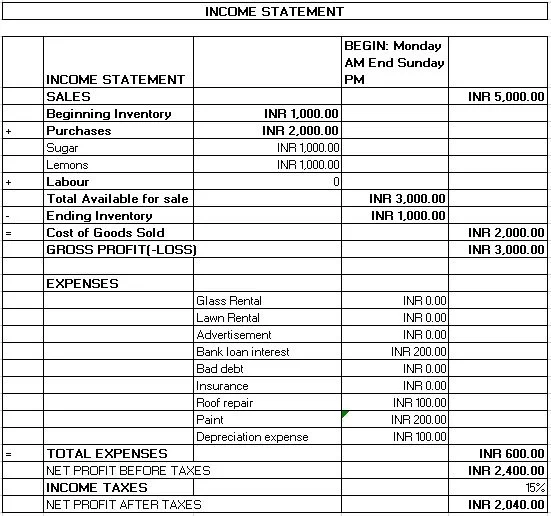
The P&L statement provides a detailed view of a business’s financial performance. Key components include:
- Gross Sales (GS): Total revenue from sales.
- Cost of Goods Sold (COGS): Direct costs of producing goods or services.
- Inventory Valuation:
- FIFO (First In, First Out): Assumes older inventory is sold first.
- LIFO (Last In, First Out): Assumes newer inventory is sold first.
- LIFO is often used to reduce taxable income but is less favored by regulators.
- Expenses:
- Indirect costs like rent, advertising, salaries, and depreciation.
- Depreciation: A non-cash expense that reduces the value of assets over time.
- Net Profit:
- Calculated as Gross Profit minus Taxes.
- Also known as the “bottom line” or net income.
A typical example of an Income Statement / Profit & Loss Statement:
5. Cash Flow Management
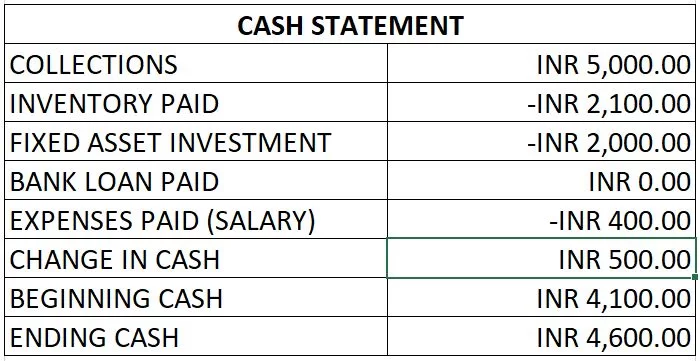
The cash statement tracks cash inflows and outflows, ensuring the business has enough liquidity to operate. Key points include:
- Cash Flow vs. Profit: Profit is theoretical, while cash flow reflects actual money available.
- Importance of Cash: Cash is essential for daily operations, paying bills, and investing in growth.
- Cash Flow Statement: Helps businesses monitor liquidity and avoid cash shortages.
A typical example of Cash Flow Statement:
Key Lessons from ‘The Accounting Game’
- Accounting is Storytelling: Financial statements tell the story of a business’s performance and health.
- Balance Sheets are Snapshots: They capture a business’s financial position at a specific moment.
- Profit ≠ Cash: Earnings and profits are theoretical; cash flow keeps the business running.
- Choose the Right Accounting Method: Accrual accounting provides accuracy, while cash accounting helps with tax planning.
- Understand Inventory Valuation: FIFO and LIFO methods impact profits and taxes.
- Depreciation is a Non-Cash Expense: It reduces asset value but doesn’t involve actual cash outflow.
- Cash is King: Effective cash flow management is crucial for business survival.
- Financial Statements are Interconnected: The balance sheet, P&L statement, and cash statement work together to provide a complete financial picture.
- Creative Accounting: Businesses can use different methods for investors and tax authorities.
- Learn by Doing: The lemonade stand story makes accounting concepts relatable and easy to understand.
Why Read ‘The Accounting Game’?
- Beginner-Friendly: Simplifies accounting with a relatable and engaging story.
- Practical Lessons: Teaches real-world applications of accounting principles.
- Memorable Approach: Uses storytelling to make complex concepts easy to remember.
How to Apply These Lessons
- Track Your Finances: Use balance sheets and P&L statements to monitor your personal or business finances.
- Manage Cash Flow: Ensure you have enough cash to cover expenses and invest in growth.
- Choose the Right Accounting Method: Select a method that aligns with your business needs and goals.
- Understand Your Financial Statements: Regularly review your balance sheet, P&L statement, and cash statement to make informed decisions.
- Invest in Learning: Continuously educate yourself about accounting and financial management.
Final Thoughts
The Accounting Game is a must-read for anyone looking to understand accounting basics. Whether you’re a business owner, student, or aspiring entrepreneur, this book provides valuable insights into managing finances effectively. By mastering the fundamentals of accounting, you can make better financial decisions, grow your wealth, and achieve long-term success.
If you found this summary helpful, share it with your friends and leave a comment below!
Here is the best personal finance book of all item summary: Rich Dad Poor Dad